This item is currently out of stock.
This product was designed by Sonocotta store.
By buying this product you support original hardware creators.


The HiFi-ESP32 Plus represents the next evolution of HiFi-ESP32 boards, featuring the advanced PCM5122 DAC with built-in DSP capabilities. This board maintains the same audio quality as the original HiFi-ESP32 while adding powerful digital signal processing features, including parametric EQ (6 BQs), and DRC. The PCM5122's flexible DSP engine can be configured for various audio enhancement scenarios, making it ideal for projects requiring sound tuning
Key Features:
HiFi-ESP32 Plus is a flexible, open-source audio platform designed to fit into both smart homes and custom audio projects.
| HiFi-ESP32 | HiFi-ESP32-Plus | |
|---|---|---|
| MCU | ESP32-WROVER-N8R8 or ESP32-S3-WROOM-N8R8 | ESP32-WROVER-N8R8 or ESP32-S3-WROOM-N8R8 |
| DAC | PCM5100A 32bit Stereo DAC (-100 dB typical noise level) | PCM5122 32bit Stereo DAC with integrated DSP (-112 dB typical noise level) |
| Output | Non-amplified stereo output, 2.1V RMS | Non-amplified stereo output, 2.1V RMS |
| Flash/PSRAM | 8MB/8MB | 8MB/8MB |
| Power | 5V over USB-C, 2x LP5907 3.3 V Ultra-Low-Noise LDO for analog section | 5V over USB-C, 2x LP5907 3.3 V Ultra-Low-Noise LDO for analog section |
| Connectivity | WiFi + BT4.2 (except S3) + BLE Ethernet (optional module) |
WiFi + BT4.2 (except S3) + BLE Ethernet (optional module) |
| DSP Features | ❌ | Parametric EQ (6xBQ), DRC ** |
| Software support | ||
| Squeezelite-ESP32 | ✅ | ✅ |
| Snapclient | ✅ | ✅ |
| ESPHome (HA) | ✅ | ✅ |
⚠️ HiFi boards require an external amplifier or active speakers; you can't connect passive speakers to it.
💡 Need to connect speakers as well? Check out Amped-ESP32 / Amped-ESP32-Plus
💡 Need only speakers output? Check out Loud-ESP32 / Loud-ESP32-Plus
💡 Need more powerful DSP? Check out Louder-ESP32 / Louder-ESP32-Plus
** Enabling EQ controls in software is a work in progress
💡 Looking for a more feature-packed version? Check out HiFi Esparagus
Audio streaming requires proper buffering to work, even with the ESP32's 500K of RAM; it is a challenging task. For that reason, all Louder-ESP32 board versions have an 8 MB PSRAM chip onboard, connected via a high-speed interface.
This board is available with either the 'classic' ESP32 or the newer ESP32-S3. They are not interchangeable for every use case, and picking the wrong one is the single most common support question — here's the short version:
| Your use case | Pick |
|---|---|
| Bluetooth A2DP from a phone/laptop | ESP32 |
| Squeezelite-ESP32 or standalone Snapclient | ESP32 |
| ESPHome media player / Sendspin | ESP32-S3 |
| Home Assistant voice assistant | ESP32-S3 |
| AirPlay 1 & 2 (coming soon) | Either — ESP32-S3 for more headroom |
If none of that applies to you and you just want the safe default, pick ESP32-S3 — it's the newer chip. Only choose classic ESP32 if you specifically need Bluetooth A2DP, or plan to run Squeezelite-ESP32/Snapclient today.
| I2S CLK | I2S DATA | I2S WS | I2S MCLK (optional) | PSRAM RESERVED | DAC/AMP EN | I2C SDA | I2C CLK. | |
|---|---|---|---|---|---|---|---|---|
| ESP32 (J) | 26 | 22 | 25 | 0 | 16, 17 | 13 | 27 | 21 |
| ESP32-S3 (H) | 14 | 16 | 15 | 0 | 35, 36, 37 | 4 | 41 | 42 |
| ESP32 (J1+) | 26 | 22 | 25 | 0 | 16, 17 | 13 | 21 | 27 |
| ESP32-S3 (H1+) | 14 | 16 | 15 | 0 | 35, 36, 37 | 4 | 42 | 41 |
| SPI CLK | SPI MOSI | SPI MISO | SPI CS | SPI HOST/SPEED | ETH INT | ETH RST | |
|---|---|---|---|---|---|---|---|
| ESP32 | 18 | 23 | 19 | 05 | 2/20MHz | 35 | 14 |
| ESP32-S3 | 12 | 11 | 13 | 10 | SPI2/20MHz | 6 | 5 |
| IR IN | RGB OUT | OLED SPI HOST/SPEED | OLED SPI CLK | OLED SPI MOSI | OLED SPI MISO | OLED SPI CS | OLED SPI DC | OLED RST | |
|---|---|---|---|---|---|---|---|---|---|
| ESP32 | 39 | 12 | 2/20MHz | 18 | 23 | 19 | 15 | 4 | 32 |
| ESP32-S3 | 7 | 9 | SPI2/20MHz | 12 | 11 | 13 | 39 | (37) | 38 |
Both HiFi-ESP32 Plus versions were created specifically to be used with Home Assistant via ESPHome integration. For both boards, rich configs were pre-created with hardware configuration for common use cases. These include
Configurations are being actively maintained and upgraded, new experimental components added for you to test and enjoy
ESP32-S3 boards have two ways of firmware update: (1) similarly to classic ESP32, they can be flashed over built-in UART, or (2) uniquely for S3, over built-in USB host controller. Since it is firmware-controlled, it may be disabled if not used (or, more commonly, not available with factory default empty firmware). When come unflashed ESP32-S3 device comes into a boot loop, with a USB-CDC device appearing and disappearing every second, and requires a special flashing initialisation sequence to get flashed:
esp_tool
Please visit the hardware section for board schematics and PCB designs. Note that PCBs are shared as multi-layer PDFs, Gerber files, and 3D-models (step files).
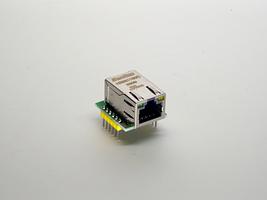
Every board has a header that allows soldering in the W5500 SPI Ethernet module that is very easy to find. The only downside is that with the module installed board will not fit the case unless it is cut to accommodate extra height.
| HiFi-ESP32 |
|---|
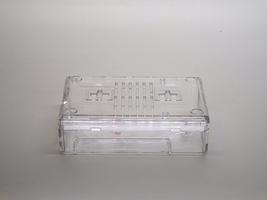
HiFi-ESP32 and HiFi-ESP32-Plus boards are mechanically compatible with Raspberry Pi 4 cases, and they are very easy to source
|
New restock batches are regularly ordered from the factory, and I plan to keep all versions available at least until the next board revision is released. For current availability, you can also check the official reseller Elecrow.
Due to the new tariffs introduced by the Trump administration, standard shipments are temporarily on hold. However, shipping to the US has now resumed via UPS, though rates are currently quite high. I’ll fully resume regular shipping as soon as the restrictions are lifted. In the meantime, you may consider ordering through Elecrow.
If you’re working on an open-source project, an educational initiative, or any pro-bono/volunteer effort, feel free to reach out for sponsorship details. I’ll do my best to provide discounts or even free boards.
If you’re interested in a custom design based on or inspired by my boards, I also offer contract design work and consultation when needed.
Most orders are shipped the next business day morning. All shipments are tracked. Delivery time in the EU is 3-7 days, outside 2-3 weeks, depending on the distance. After 30 days, the package is considered lost - reach out for a refund or replacement.