This product was designed by Sonocotta store.
By buying this product you support original hardware creators.


Raspberry Pi Hat powered by two PCM5100 DACs paired with TPA3110 D-class amp
What is it?
The Amped Raspberry Hat is a PCM5100 HiFi DAC combined with a highly efficient TPA3110D2 D-class amplifier. It brings all the best from the HiFi Raspberry Hat model and adds an onboard amplifier to form a complete solution that can be paired with speakers directly. It uses an external power source to feed hungry amps and host Pi using an onboard drop-down converter.
| 1X | 2X |
|---|---|
Amped Raspberry Hat comes in two flavors: 1X hat is a stereo DAC and stereo Amp that will work with pretty much any Raspberry out there, while 2X Hat is a dual setup delivering 4 independent channels using Raspberry Pi 5 capability of multi-channel I2S.
Why did I build it
I did a few audio projects in the past, some using ESP32, some using larger Orange Pi and Raspberry Pi devices. Each has its pros and cons, and with each iteration, I'm trying to focus on the details that were working best for me while actually using them.
What is special about the Raspberry ecosystem is, of course, its community support. Being a not-so-strong software developer, I often have to rely on the work that other people did and baked into the base Raspbian image. Attaching a DAC, Ethernet, and IR reader is as simple as adding 3 lines into config.txt file. All the device tree definitions, kernel drivers, and dependency packages are already in place, believe it or not.
Sure, compared to the ESP32 platform, it is not as lightweight. It requires more power, it takes some time to boot. But when it comes to rapid development, there is nothing like the Raspberry Pi.
Amped Raspberry Hat uses the legendary PCM5100 series DAC with supreme audio quality. It feeds its output to the TPA3110 D-class amp with both great sound and unbelievable power efficiency. You can use it with either small or large speakers directly plugged into the Hat. The hat will require an external power source to drive your speakers properly, but it will also power Pi itself through a power-efficient drop-down regulator, allowing the whole setup to run using a single power source. It is absurdly simple to set up, as it uses no extra configuration compared to the PCM5100 DAC itself, so any Raspberry Linux distribution has everything you need.
Use cases
Amped Raspberry Hat Plus is a flexible, open-source audio platform designed to fit into both smart homes and custom audio projects.
- Smart Home Audio, TTS & Automation Node Integrates with Home Assistant and Music Assistant for high-quality playback, text-to-speech, and event-driven announcements. Functions as both an audio endpoint and a networked automation node for sensors, triggers, and smart home workflows.
- Multi-Room Audio Infrastructure Use Amped Raspberry Hat Plus as a Snapclient server and endpoint for perfectly synchronized distributed audio. Ideal for open, vendor-neutral whole-home or commercial audio systems.
- Standalone Network Player & Streaming Hub Run LMS/Squeezelite for a self-contained streaming device supporting Spotify Connect, AirPlay, and Logitech Media Server — no external computer required.
- Embedded Audio Processing & DSP Platform Execute real-time digital signal processing, filtering, effects, or audio analysis directly on-device. Suitable for smart speakers, alert systems, acoustic sensing, and custom audio interfaces.
- Networked Sensor & Interface Controller Combine audio output with GPIO control, sensors, buttons, displays, or actuators. Ideal for interactive installations, smart appliances, voice feedback devices, or industrial status systems.
- Educational Platform for Systems & Networking A practical teaching platform for embedded Linux-style workflows without full SBC overhead — covering networking, streaming protocols, real-time processing, IoT architectures, and open-source audio systems.
- Rapid Prototyping for Connected Products Designed for fast iteration of networked hardware products — from smart audio devices and notification systems to interactive kiosks and connected consumer electronics.
- Open Platform for Custom Products & DIY Builds With fully open firmware and tooling, Amped Raspberry Hat Plus provides a flexible foundation for personal projects, research platforms, or commercial device development.
Features
| Amped Raspberry Hat 1X | Amped Raspberry Hat 2X | Amped Raspberry Media Center | |
|---|---|---|---|
| Image | |||
| DAC | PCM5100A 32-bit Stereo DAC | Dual PCM5100A 32-bit Stereo DAC | PCM5100A 32-bit Stereo DAC |
| Amp | TPA3110D2 D-Class amp; TPA3128 starting from Rev E | TPA3110D2 D-Class amp | TPA3110D2 D-Class amp; TPA3128 starting from Rev E |
| Line Output | 2.1 VRMS Line level output -100 dB typical noise level | 2.1 VRMS Line level output -100 dB typical noise level | 2.1 VRMS Line level output -100 dB typical noise level |
| Output, 8Ω, 1% THD (TPA3110) | 2x 22W | 4x 22W | 2x 22W |
| Output, 8Ω, 1% THD (TPA3118/3128) | 2x 25W | - | - |
| Output, 4Ω, 1% THD (TPA3110) | 2x 25W | 4x 25W | 2x 25W |
| Output, 4Ω, 1% THD (TPA3118/3128) | 2x 40W | - | - |
| IR input | ✅ | ✅ | ✅ |
| RGB LED | ❌ | ❌ | ✅ |
| Onboard Serial Bridge | ❌ | ❌ | ✅ |
| Wizznet W5500 Ethernet | ❌ | ❌ | ✅ |
| Mechanical dimensions (WxHxD) | 65mm x 56mm x 20mm | 65mm x 56mm x 20mm | 88mm x 38mm x 100mm |
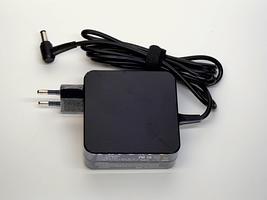
| Power requirement | up to 26V from external PSU | up to 26V from external PSU | 65W USB-C PD power adapter or up to 26V from external PSU |
⚠️ Amped boards can't drive headphones and speakers at the same time (unless you modify them)
💡 Don't need to connect speakers? Check out HiFi Raspberry Hat and HiFi Raspberry Media Center
💡 Don't need to connect headphones or an external amp? Check out Loud Raspberry Hat and Loud Raspberry Media Center
Board Pinout
| I2S CLK | I2S DATA | I2S WS | TPA3110 EN | |
|---|---|---|---|---|
| Raspberry Pi Zero | 18 | 21 | 19 | [Rev A, B] 5,6 |
| Raspberry Pi 2,3 | 18 | 21 | 19 | [Rev A, B] 5,6 |
| Raspberry Pi 5 | 18 | 21, 23, 25, 27 | 19 | [Rev A, B] 5,6,7,8 |
How to use
You need nothing more than an SD card with a Raspbian image and a USB-C power brick. You can use any distribution you like. The only change you need to make to enable hardware is to add 3 lines to the /boot/config.txt
dtoverlay=hifiberry-dac
Originally, amps could be shut down using GPIO pins, but in the latter version of the board, I removed that functionality. The reason is that TPA3116 doesn't have a dedicated MUTE pin, and I was using the SHDN pin for that purpose. Changing the voltage on that pin created a pop sound, no matter how slowly I changed the voltage. I'm planning to switch to a more modern TPA32XX series going forward to solve this issue.
If you have early board and want to control the amp using GPIO, you may use software integration to pull GPIO5/6 HIGH or LOW to switch the amp ON and OFF.
Other software options
The project repository provides a few examples with build instructions, including Volumio setup instructions, among others.
Hardware
Please visit the hardware section of the project repo for board schematics and PCB designs. Note that PCBs are shared as multi-layer PDFs as well as Gerber archives.
PCB diagram
| 1X | 2X |
|---|---|
New TPA3118/TPA3128 design
Originally, I used the TPA3110 amp with Amped Raspberry Pi boards for its simplicity and availability. The only issue with TAP3110 is that it lacks the MUTE pin. It does have an STBY pin, but as it turned out, it is not pop-free, meaning each time you switch it on and off, the amp makes a loud pop in the speakers. I tried changing the level slowly, but it didn't help.
Help came with a newer TPA3128 amp with revision H of the Amped-ESP32
- It does have a true MUTE pin, and now it is software-controlled on Amped Raspberry boards. It means that the board starts dead-quiet, and it stays quiet when the audio is paused
- It can work with 4.5V, so it plays even when powered from a simple 5V source, similar to Louder-Raspberry. TPA3110 needs at least 8V to spin up
- TPA3128 has a marginally better audio quality, as they say. I cannot hear the difference 😉
⚠️ TPA3128 boards default to 1SPW modulation, which causes audible pops when exiting MUTE and a quiet static noise afterward. See errata: TPA3128 1SPW modulation pop and static noise issue for a permanent hardware fix.
On the latest revisions I'm switching over to the TPA3118 amp, replacing TPA3128 for a few reasons:
- MUTE schematic is updated to slow down voltage ramping speed on turn on – this helps reduce pop noise to “I can no longer hear it” level
- Modulation is hardwired to BD (1SPW is more efficient, but caused pops as well)
- Gain is fixed at a 20dB level – also helps with pops
- I added a band-pass input filter network to make sure it is noise-free.
Raspberry Pi 5 note (starting from Rev C)
Raspberry Pi 5 is the first one that allows the user to drive multiple I2S data lines using the same interface. What it means in practice is that while all older Pis have just 3 I2S lines (CLK, WS, DATA), Pi5 supports up to 4 Data lines (CLK, WS, D0, D1, D2, D3), capable of driving 4 independent audio interfaces.
2X Raspberry Pi hats support alternative data lines. You need to short some solder bridge to use it, though. It allows configuring Hats to use different pins and stack them together to create 4 individual stereo interfaces (8 channels in total) using the same device.
By default, the 2X hat uses pins 21,23 for data, with the possibility to switch to pins 25 and 27 with solder bridges and stack 2 boards together.
| HiFi Hat (rev C) | HiFi Hat (rev D) | HiFi-Amped Hat | Loud Hat |
|---|---|---|---|
The configuration value that allows this is quite simply
dtoverlay=hifiberry-dac8x
At this point, all Hats with 1X marking a single DAC version that can be used with every Pi, including Pi 5. The 2X version uses two data lines of the Pi5 and will work out of the box with it. It can be changed to use a second set of data lines, so 2 boards stacked together will utilize 4 DACs or 8 channels of audio. You can short data lines together and use 2X Hat with Pi2/3/4, having 2 parallel DAC channels.
Restocking & Availability
New restock batches are regularly ordered from the factory, and I plan to keep all versions available at least until the next board revision is released.
USA shipping Update
Due to the new tariffs introduced by the Trump administration, standard shipments are temporarily on hold. However, shipping to the US has now resumed via UPS, though rates are currently quite high. I’ll fully resume regular shipping as soon as the restrictions are lifted.
Sponsorship & Community Support
If you’re working on an open-source project, an educational initiative, or any pro-bono/volunteer effort, feel free to reach out for sponsorship details. I’ll do my best to provide discounts or even free boards.
Custom Design & Consultation
If you’re interested in a custom design based on, or inspired by, my boards, I also offer contract design work and consultation when needed.
Links to code and documentation
Shipping policy
Most orders are shipped the next business day morning. All shipments are tracked. Delivery time in the EU is 3-7 days, outside 2-3 weeks, depending on the distance. After 30 days, the package is considered lost - reach out for a refund or replacement.
Here are some extras that might be useful for your project!
Amped Raspberry Pi Hat
Sold by Sonocotta store
$20.00
No tax for United States [change]
Stock available: 9
Volume discount | |
2+ items | $19.20 |
5+ items | $18.40 |
10+ items | $17.00 |
The seller

Smart Home and DIY Electronics