This item is currently out of stock.
This product was designed by Sonocotta store.
By buying this product you support original hardware creators.


The Amped Raspberry Media Center is a compact and neatly designed hardware project that combines the power of the Raspberry Pi Zero board and the Hi-Fi audio capabilities of the TI’s PCM5100 HiFi DAC combined with a highly efficient TPA3110D2 D-class amplifier. This versatile media center provides a customizable and fully open-source hardware platform for home entertainment.
I did a few audio projects in the past, some using ESP32, some using larger Orange Pi and Raspberry Pi devices. Each has its pros and cons, and with each iteration, I'm trying to focus on the details that were working best for me while actually using them.
What is special about the Raspberry ecosystem is, of course, its community support. Being a not-so-strong software developer, I often have to rely on the work that other people did and baked into the base Raspbian image. Enabling the Ethernet and IR reader is as simple as adding 2 lines into config.txt file. Adding DAC is a 5-minute job (with attached code). All the device tree definitions, kernel drivers, and dependency packages are already in place, believe it or not.
Sure, compared to the ESP32 platform, it is not as lightweight. It requires more power, it takes some time to boot. But when it comes to rapid development, there is nothing like the Raspberry Pi.
Amped Raspberry Media Center brings all the best from the HiFi model and adds an onboard amp to form a complete solution that can be paired with speakers directly. It uses an external power source to feed hungry amps and host Pi using an onboard drop-down converter. It has similar power capabilities to the Amped Raspberry DAC, but it is much simpler to use since it only needs a valid I2S signal to operate, so it is a single line of configuration in the config.txt file.
Amped Raspberry Media Center is a flexible, open-source audio platform designed to fit into both smart homes and custom audio projects.
| Amped Raspberry Hat 1X | Amped Raspberry Hat 2X | Amped Raspberry Media Center | |
|---|---|---|---|
| Image | |||
| DAC | PCM5100A 32-bit Stereo DAC | Dual PCM5100A 32-bit Stereo DAC | PCM5100A 32-bit Stereo DAC |
| Amp | TPA3110D2 D-Class amp; TPA3128 starting from Rev E | TPA3110D2 D-Class amp | TPA3110D2 D-Class amp; TPA3128 starting from Rev E |
| Line Output | 2.1 VRMS Line level output -100 dB typical noise level | 2.1 VRMS Line level output -100 dB typical noise level | 2.1 VRMS Line level output -100 dB typical noise level |
| Output, 8Ω, 1% THD (TPA3110) | 2x 22W | 4x 22W | 2x 22W |
| Output, 8Ω, 1% THD (TPA3118/3128) | 2x 25W | - | - |
| Output, 4Ω, 1% THD (TPA3110) | 2x 25W | 4x 25W | 2x 25W |
| Output, 4Ω, 1% THD (TPA3118/3128) | 2x 40W | - | - |
| IR input | ✅ | ✅ | ✅ |
| RGB LED | ❌ | ❌ | ✅ |
| Onboard Serial Bridge | ❌ | ❌ | ✅ |
| Wizznet W5500 Ethernet | ❌ | ❌ | ✅ |
| Mechanical dimensions (WxHxD) | 65mm x 56mm x 20mm | 65mm x 56mm x 20mm | 88mm x 38mm x 100mm |
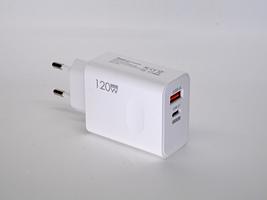
| Power requirement | up to 26V from external PSU | up to 26V from external PSU | 65W USB-C PD power adapter or up to 26V from external PSU |
⚠️ Amped boards can't drive headphones and speakers at the same time (unless you modify them)
💡 Don't need to connect speakers? Check out HiFi Raspberry Hat and HiFi Raspberry Media Center
💡 Don't need to connect headphones or an external amp? Check out Loud Raspberry Hat and Loud Raspberry Media Center
| I2S CLK | I2S DATA | I2S WS | |
|---|---|---|---|
| Raspberry Pi Zero | 18 | 21 | 19 |
| Raspberry Pi 2,3 | 18 | 21 | 19 |
| Raspberry Pi 5 | 18 | 21, 23, 25, 27 | 19 |
You need nothing more than an SD card with a Raspbian image and a USB-C power brick. You can use any distribution you like. The only change you need to make to enable hardware is to add 3 lines to the /boot/config.txt
dtoverlay=hifiberry-dac
| Front | Back | PCB |
|---|---|---|
Please visit the hardware section of the project repo for board schematics and PCB designs. Note that PCBs are shared as multi-layer PDFs as well as Gerber archives.
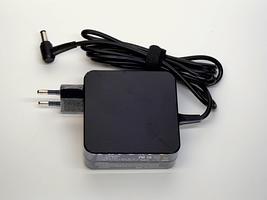
The “hammer-style” solution I came up with is a NOPD version of the Amped Raspberry that lets you use a barrel power jack to supply raw voltage directly. The catch? Standard 2mm pins can’t handle high currents, so I’ve gone with a 2.5mm pin instead — it’s a bit unusual, but still common enough in the laptop world.
With this setup, you can supply more than the 20V limit of PD, giving you a bit more power for the speakers. You probably won’t hear much difference (thanks to the way human hearing works), but it could help larger speakers that need a bit more to really “open up." Other than that, the NOPD version works just like the PD version — no software changes are needed.
The power adapter specs depend on the speaker you're planning to use. DAC efficiency is close to 100%, so just take the power rating of your speaker (say 2x10w) and impedance (say 8 ohms), and you'd need at least 9 volts rated at 1.2 amps per channel, round up to 3 total amps. Consider Pi itself drawing 5-10W of power when busy.
It is not recommended to go beyond the voltage your speakers can take, otherwise, the amp will blow your speakers in no time.
The absolute maximum voltage for the TPA3110 Amp is 30V, but it is not guaranteed to be thermally stable in this condition.
New restock batches are regularly ordered from the factory, and I plan to keep all versions available at least until the next board revision is released.
Due to the new tariffs introduced by the Trump administration, standard shipments are temporarily on hold. However, shipping to the US has now resumed via UPS, though rates are currently quite high. I’ll fully resume regular shipping as soon as the restrictions are lifted.
If you’re working on an open-source project, an educational initiative, or any pro-bono/volunteer effort, feel free to reach out for sponsorship details. I’ll do my best to provide discounts or even free boards.
If you’re interested in a custom design based on, or inspired by, my boards, I also offer contract design work and consultation when needed.
Most orders are shipped the next business day morning. All shipments are tracked. Delivery time in the EU is 3-7 days, outside 2-3 weeks, depending on the distance. After 30 days, the package is considered lost - reach out for a refund or replacement.
