This item is currently out of stock.
This product was designed by Sonocotta store.
By buying this product you support original hardware creators.


The Esparagus Audio Brick is a high-fidelity, modular audio endpoint built for makers, smart home integrators, and audio enthusiasts. It combines an ESP32 core, the TAS5825M DAC/amp, and robust connectivity (Ethernet/WiFi) into a DIN-rail-mountable board that supports stereo, mono, bi-amp, or subwoofer configurations. With over-the-air updates, full DSP control, and an open software stack, it bridges the gap between DIY audio and professional installations. The Audio Brick is optimized for DIN-rail mounting and modular expansion. Thermal management has been improved for enclosed installs, the power stage has been reworked for efficiency, and the design has been cost-reduced to make multi-unit deployments more practical.
It comes in two models: a standard Single DAC model for standard 2-channel installs, which can also be configured into a bridge mode, where both channels can drive a single low-impedance load, typically a subwoofer. The Dual DAC variant of the Audio Brick's main feature is a second TAS5825M DAC that is connected to the same I2S line (so it is perfectly synced with the primary DAC), but allows flexible configuration as either an additional two channels of audio, a more powerful subwoofer channel, or even a bi-amp configuration, with each DAC driving one speaker (one driver per channel).
| Single DAC | Dual DAC |
|---|---|
It can be used both with Wi-Fi and Ethernet (to make sure bad Wi-Fi would not interrupt the stream)
For the last ten years or so, I've been building a home audio system for my own home. Starting with off-the-shelf parts and second-hand audio gear, I got into modifying them, making them smarter and more integrated, more accessible for family members and automations. Every device I did is designed to improve my experience, based on my own use and community feedback, coming from people around the world.
After using a Raspberry Pi-based setup for more than 10 years, I do believe the ESP32 platform is finally at the point where it offers the same level of experience at a much lower price, and, more importantly, much more reliability and longevity. Latest changes in the Home Assistant world, including new Sendspin protocol development, allow incredibly lightweight and service-free installs that offer just as much as much bigger and more complicated setups based on Linux SBCs and even commercial setups. An open and developer-friendly ecosystem allows incredible possibilities for automations, integration with other smart devices, and cost-free upgrades in the future.
Furthermore, what takes Audio Brick apart from many other projects is built-in DSP support for the TAS5825M DAC. If you ever asked yourself how come JBL or Marshall tiny speakers sound so good for their size, or even why pro-studio equipment is so much more expensive than home-audio equipment, it is DSP that makes the difference. And with Audio Brick you're in full control; you define the sound you get from the speakers, based on your own space and taste. And new features are being developed to allow even more DSP settings to be adjusted to get the best sound your speakers are capable of.
| Louder Esparagus | Esparagus Audio Brick | Esparagus Audio Brick Dual DAC | |
|---|---|---|---|
| MCU | ESP32-WROVER-N8R8 | ESP32-WROVER-N8R8 or ESP32-S3-WROOM-N8R8 | ESP32-S3-WROOM-N8R8 |
| DAC | Stereo I2S DAC (TAS5805M) with built-in D-Class amp | Stereo I2S DAC (TAS5825M) with built-in D-Class amp | Dual I2S DAC (TAS5825M) with built-in D-Class amp |
| Output (4Ω, 1% THD+N) | 2x 32W | 2x 45W | 4x 45W |
| Output (8Ω, 1% THD+N) | 2x 23W | 2x 30W | 4x 30W |
| Output (Bridge, 4Ω, 1% THD+N) | 1x 45W | 1x 53W | 2x 53W |
| IR reader | ✅ | ❌ | ❌ |
| RGB LED | ✅ | ✅ | ✅ |
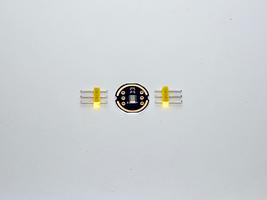
| I2S Microphone | ❌ | ✅ | ❌ |
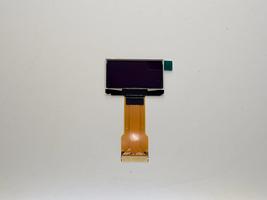
| OLED screen (128 x 64px) | ✅ | ✅ | ❌ |
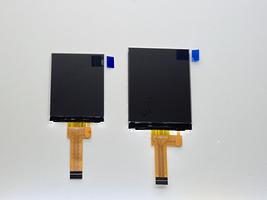
| TFT screen (320 x 240px) | ❌ | ❌ | ✅ |
| Flash/PSRAM | 8MB/8MB | 8MB/8MB | 8MB/8MB |
| Connectivity | WiFi + BT4.2 + BLE + Ethernet | WiFi + BT4.2 + BLE + Ethernet | WiFi + BLE + Ethernet |
| Case | 88 x 38 x 100 mm Aluminum case | 90 x 90 x 40 mm DIN-rail mountable case | 125 x 90 x 40 mm DIN-rail mountable case |
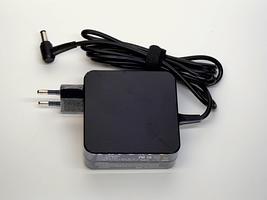
| Power requirement | Generic power adapter 5..28V or USB-PD capable power adapter | Generic power adapter 5..28V | Generic power adapter 5..28V |
| Software support | |||
| Squeezelite-ESP32** | ✅ | ✅ | ✅ |
| Snapclient*** | ✅ | ✅ | ✅ |
| ESPHome (HA) | ✅ | ✅ | ✅ |
⚠️ ** Squeezelite-ESP32 support for the ESP32-S3 is an experimental feature and is not fully stable; for styable operation, 'classic' ESP32 is recommended. Please refer to the original repo for up-to-date support information
⚠️ *** Snapclient support for the ESP32-S3 is in beta and not fully stable as well. For best results, 'classic' ESP32 is recommended.
⚠️ Louder boards will connect to passive speakers; you can't use headphones or an external amp
💡 Need to connect an external amp? Check out HiFi Esparagus and Amped Esparagus
💡 Don't need DSP capabilities? Check out Loud Esparagus
💡 Looking for a more cost-efficient version? Louder-ESP32 / Louder-ESP32-Plus
This board is available with either the 'classic' ESP32 or the newer ESP32-S3. They are not interchangeable for every use case, and picking the wrong one is the single most common support question — here's the short version:
| Your use case | Pick |
|---|---|
| Bluetooth A2DP from a phone/laptop | ESP32 |
| Squeezelite-ESP32 or standalone Snapclient | ESP32 |
| ESPHome media player / Sendspin | ESP32-S3 |
| Home Assistant voice assistant | ESP32-S3 |
| AirPlay 1 & 2 | Either — ESP32-S3 for more headroom |
If none of that applies to you and you just want the safe default, pick ESP32-S3 — it's the newer chip. Only choose classic ESP32 if you specifically need Bluetooth A2DP, or plan to run Squeezelite-ESP32/Snapclient today.
Please refer to pinout section of the docs.
Both Audio Brick revisions run rbouteiller/airplay-esp32, an open-source AirPlay 1 & 2 receiver you can flash straight from your browser via the web-installer — no PlatformIO or toolchain required. It's a separate firmware image from Squeezelite-ESP32 and Snapclient above, so flash whichever matches how you want to use the board.
AirPlay 2 support above isn't just playback — it exposes the TAS5825M's/TAS5805M's on-chip DSP in full from the board's web UI:
| A | B |
|---|---|
Work in progress: REW (Room EQ Wizard) integration, to drive automatic room-correction algorithms directly from a measured response.
Both Esparagus Audio Brick versions were created specifically to be used with Home Assistant via ESPHome integration. For both boards, rich configs were pre-created with hardware configuration for common use cases. These include
Configurations are being actively maintained and upgraded, and new experimental components are being added for you to test and enjoy
Please visit the hardware section for board schematics and PCB designs.
The Audio Brick is designed with a DIN-rail mount option, making it suitable not only for hobby projects but also for structured and semi-industrial installations. By mounting directly in an electrical cabinet or distribution box, it becomes easy to wire, power, and manage multiple units in a clean and reliable way. Since each device drives two channels, you can scale simply by adding more Bricks — one per room, per zone, or per speaker as needed. This modular approach makes it practical for whole-home or even small commercial audio installs where consistency and neat wiring matter.
For added convenience, it uses plug-in connector pairs (not yet on the prototype), which simplify installation and allow quick replacement in case of maintenance or failure.
TAS5825M DAC allows two modes of operation - BTL (stereo) and PBTL (parallel, or mono). In mono, the amp will use a completely different modulation scheme and basically will fully synchronize output drivers. Jumpers on the board allow both output drivers to connect to the same speaker. The most important step is to inform the Amp to change modulation in the first place via I2C configuration.
One can test audio with a single speaker connected between L and R terminals (plus on one side and minus on the other). Optionally, jumpers on the board will effectively connect the second driver in parallel, doubling the current capability.
The TAS5825M DAC has a very powerful DSP that allows doing lots of data processing on the silicon, which otherwise would take a considerable part of your CPU time. At the moment of writing exposing the DAC features in active development, with a focus on the ESPhome component and controls exposed in the Home Assistant UI. What you have today is
Currently in development
At this moment, it is very experimental. In the perfect world, you should be able to adjust all of those settings to make your speaker-enclosure setup work the best it can, and even apply your room factors into the equation. It is a work in progress.
The TAS5825M DAC can be quite a power-hungry device; simply using 5V over the USB-C would limit its power to mere 5W. It is recommended to use a 12- 26V power adapter, DIN-rail mountable in case of an industrial setup, but also generic power adapters will do just fine, as long as their rated power is at least 20% above what you want to get on the speakers. It is not recommended to go above 26V (although it is rated to up to 30V), since the DAC will report an overvoltage fault and eventually will go into protection mode, cutting the audio off
The power adapter requirements depend on the speaker power rating and impedance.
Since the amplifier (DAC) operates at roughly 80% efficiency, use the following method to determine the minimum voltage and current required.
Calculate the Required Voltage (per channel)
V_RMS = sqrt(P * R)
For a 10 W, 8 Ω speaker:
V_RMS = sqrt(10W * 8Ohm} = ~9V
Calculate the Required Current (including efficiency)
I_out = V_rms / R
For 9 V RMS into 8 Ω:
I_out = 9V / 8Ohm = ~1.2A
Example:
Two 10 W, 8 Ω speakers → ≈ 1.2 A per channel × 2 ≈ 2.4 A, rounded up to 3 A total.
Final Result
For a pair of 10 W / 8 Ω speakers, you need a power adapter rated for at least:
It is not recommended to go far beyond the voltage your speakers can handle; otherwise, the amp will blow your speakers in no time. Using a 12V power source with a 9V requirement probably will be totally fine, but getting a 20V power source for 10W speakers is a waste of budget and added risk.
New restock batches are regularly ordered from the factory, and I plan to keep all versions available at least until the next board revision is released. For current availability, you can also check the Crowd Supply or official reseller Elecrow.
Due to the new tariffs introduced by the Trump administration, standard shipments are temporarily on hold. However, shipping to the US has now resumed via UPS, though rates are currently quite high. I’ll fully resume regular shipping as soon as the restrictions are lifted. In the meantime, you may consider ordering through Crowd Supply or Elecrow
If you’re working on an open-source project, an educational initiative, or any pro-bono/volunteer effort, feel free to reach out for sponsorship details. I’ll do my best to provide discounts or even free boards.
If you’re interested in a custom design based on, or inspired by, my boards, I also offer contract design work and consultation when needed.
Most orders are shipped the next business day morning. All shipments are tracked. Delivery time in the EU is 3-7 days, outside 2-3 weeks, depending on the distance. After 30 days, the package is considered lost - reach out for a refund or replacement.
